What would you do if the thing you loved most was being taken away — not because of lack of talent, but because of something happening inside your own body that you couldn’t control?
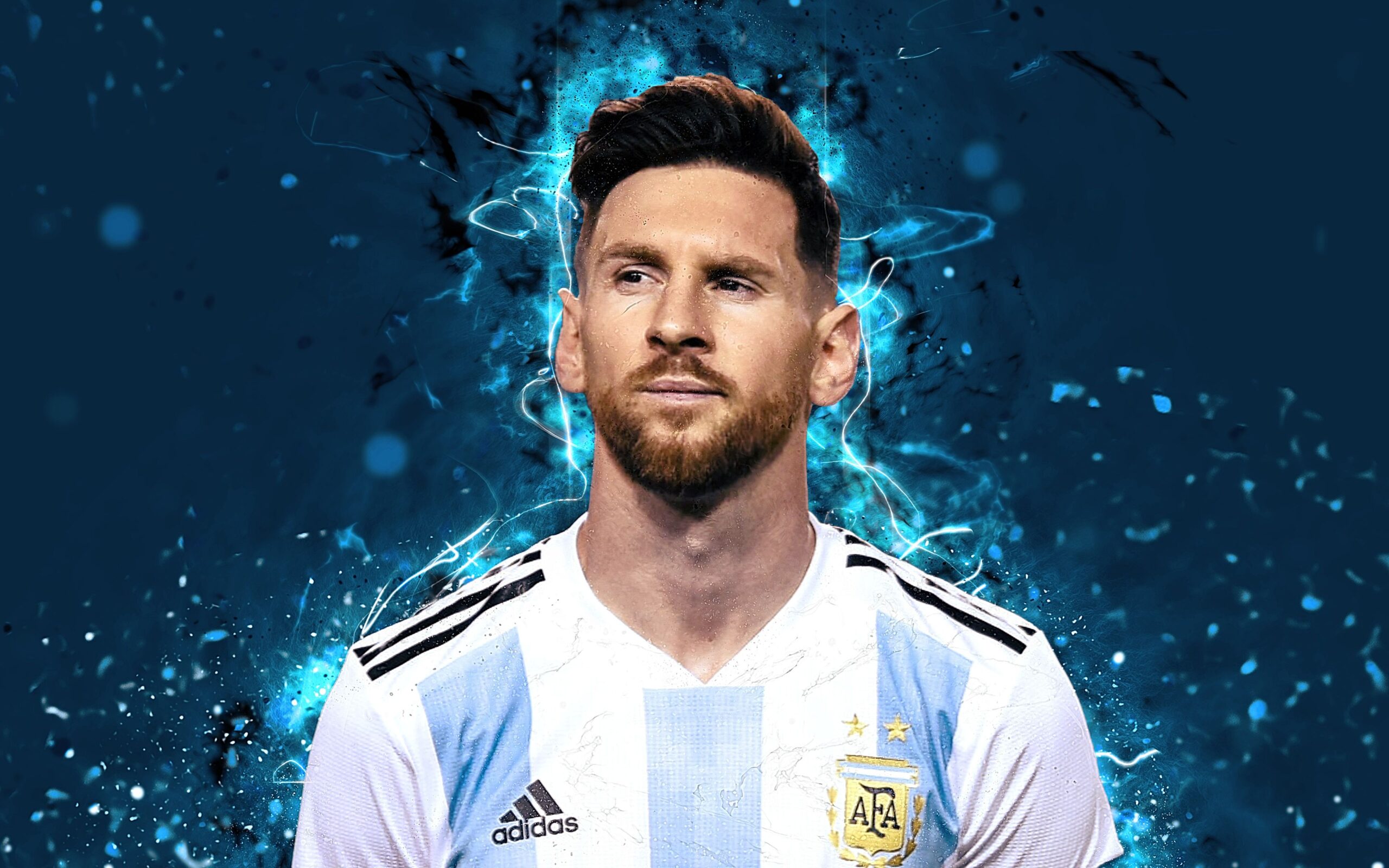
At 11 years old, Lionel Messi sat in a doctor’s office in Rosario, Argentina, and received a diagnosis that could have ended everything. His body had stopped producing the growth hormone it needed. Without expensive treatment, doctors predicted he would reach a maximum height of around 4 feet 7 inches — and stop growing entirely.
The treatment costs $900 a month. His family couldn’t afford it. The biggest clubs in Argentina — River Plate, Newell’s Old Boys — refused to pay it.
A boy with more natural talent than almost anyone had ever seen was about to lose football because no one would foot the medical bill.
What happened next is the reason you know his name.
Born in Rosario, Destined for the Ball
Lionel Andrés Messi was born on June 24, 1987, in Rosario, Argentina. His father, Jorge Messi, was a steelworker of Italian descent. His mother, Celia, worked part-time in a magnet manufacturing workshop. They were a working-class family — not poor by Argentine standards, but far from wealthy. (Britannica)
From the moment he could walk, Messi had a football at his feet. He joined the youth team at Newell’s Old Boys in Rosario at age six in 1993. Even as a small child, he was impossible to ignore. Videos of him at age seven — weaving through opponents twice his size as if they were standing still — have since gone viral decades after they were filmed. (ESPN)
Word spread. Scouts from the biggest clubs in Argentina took notice. And then, around age nine, something started to go wrong.
The Diagnosis That Could Have Ended Everything
Messi had stopped growing. After a year of tests, his doctor in Rosario, Diego Schwarztein, delivered the verdict in 1999: Growth Hormone Deficiency (GHD). Without intervention, Messi would likely stop growing at around 4 feet 7 inches. (Dartmouth — Messi’s Medical Journey)
The treatment was straightforward but expensive — nightly injections of synthetic human growth hormone, directly into his own legs. The cost: approximately $900 a month. For a steelworker’s family in Argentina, that was an impossible sum. (Bleacher Report)
Newell’s Old Boys — the club he had been playing for since age six — refused to cover it. River Plate, one of the most prestigious clubs in Argentina, was approached. They also passed. No Argentine club was willing to pay for a boy, however gifted, with no guarantee of return. (ESPN)
Messi’s family was left with one option: find someone who believed in him enough to take the risk. His father Jorge began making calls — further afield, across the Atlantic, to Europe.
The Napkin That Changed Football Forever
In late 2000, thirteen-year-old Messi and his father travelled to Barcelona for a trial at FC Barcelona’s legendary youth academy, La Masia. Barcelona’s sporting director at the time, Carles Rexach, had been told about this boy from Argentina. What he saw in training left him with no doubt.
Rexach wanted to sign him immediately. He called an impromptu meeting at a tennis club. There was no official document available. He grabbed a paper napkin — a 16.5 x 16.5 cm paper napkin — and wrote out the terms by hand: (GiveMeSport)
“In Barcelona, on 14 December 2000 and in the presence of Messrs Minguella and Horacio, Carles Rexach, FC Barcelona’s sporting director, hereby agrees, under his responsibility and regardless of any dissenting opinions, to sign the player Lionel Messi, provided that we keep to the amounts agreed upon.”
Barcelona agreed to pay for his medical treatment in full. The napkin was signed. Messi had a club. (SportBible)
That napkin was auctioned in London in May 2024 — it sold for £762,400. (SportBible)
Leaving Everything Behind at 13
Moving to Barcelona meant leaving Rosario permanently. Messi left behind his friends, his extended family, the city he had grown up in — everything familiar — at 13 years old. He arrived in a country whose language he was still learning, to compete in one of the most competitive youth football academies in the world. (Britannica)
He was placed in Barcelona’s under-14 team. He scored 21 goals in 14 games. He moved through the youth levels at a pace the academy had rarely seen — C team, B team, then a first-team friendly debut at age 16. (Britannica)
Every night during his treatment years, he injected his own legs with growth hormone. He did it quietly, without complaint, while competing against boys who had never had to think about whether their bodies would develop properly. (ESPN)
He was shorter than almost every teammate and opponent he faced. He used it. His lower centre of gravity, his quick feet, his ability to change direction at full speed — the very things that his condition had shaped — became the foundation of his style. As he has said himself: “Something deep in my character allows me to take the hits and get on with trying to win.”
The Competitive Debut That Made History
In October 2004, during the 2004–05 La Liga season, Messi made his official competitive debut for Barcelona’s first team at the age of 17. He became the youngest player ever to appear in La Liga at that time — and the youngest to score a La Liga goal. (Britannica)
Manager Frank Rijkaard promoted him to the senior squad permanently that season. He won his first La Liga title with Barcelona in 2004–05 — the same season he made his competitive debut. The rise from there was relentless. (Wikipedia — Career of Lionel Messi)
The Records That Redefined Football
What Messi built over the following two decades is without precedent in the history of football. Here are the verified numbers: (Wikipedia)
8 Ballon d’Or awards — more than any player in the history of the sport, won in 2009, 2010, 2011, 2012, 2015, 2019, 2022, and 2023.
672 goals for Barcelona — the most scored by any player for a single club in history. 474 La Liga goals — the all-time record for the Spanish top flight. 91 goals in a single calendar year (2012) — a Guinness World Record that still stands.
4 UEFA Champions Leagues with Barcelona. 10 La Liga titles. 46 team trophies in total — the most of any footballer in professional history. (Sports Illustrated)
And then, in December 2022 in Qatar — the one trophy that had eluded him, the one that his critics said would forever define his legacy — Argentina won the FIFA World Cup. Messi led the tournament from front to back, scored in the final, and lifted the trophy that completed everything. (Britannica)
After spells at Paris Saint-Germain (2021–2023), Messi joined Inter Miami in MLS in 2023 — and won the club’s first ever MLS Cup in 2025, while also winning back-to-back league MVP awards. (Wikipedia) At 37 years old, he is still playing. Still scoring. Still the best in whatever room he walks into.
What His Story Actually Teaches
The world told Messi no at every stage before Barcelona.
His own body said no. The Argentine clubs said no. The people with the resources to help him said the investment wasn’t worth it. He was the most talented child footballer in his country — and he was about to be left behind because of a medical bill.
He has been asked many times what drives him. His answer is always the same: “Money is not a motivating factor. Money doesn’t thrill me or make me play better. I’m just happy with a ball at my feet. My motivation comes from playing the game I love.”
That is not the answer of a man chasing status. That is the answer of a boy who almost lost the thing he loved most and never forgot how close it came to being taken away.
The nightly injections into his own legs. The move at 13 to a country he didn’t know. The years of being the smallest on the pitch. All of it built the foundation for the most decorated career in football history.
Your obstacles are not the end of your story. Sometimes they are the very thing that makes you extraordinary.
Never give up.
Want more stories like this? Read about how Sylvester Stallone said no to $350,000 while homeless, or how Michael Jackson turned a stolen childhood into the greatest entertainment career in history.
Sources
- Wikipedia — Lionel Messi
- Wikipedia — Career of Lionel Messi
- Britannica — Lionel Messi
- ESPN — Oral History of the Napkin Signing
- Bleacher Report — Messi and HGH: The Truth
- GiveMeSport — The Napkin Contract
- SportBible — The Napkin Sold for £762,400
- Dartmouth — Messi’s Medical Journey
- Sportscasting — How Messi’s Condition Almost Cost Him His Career
- Sports Illustrated — How Many Trophies Does Messi Have?