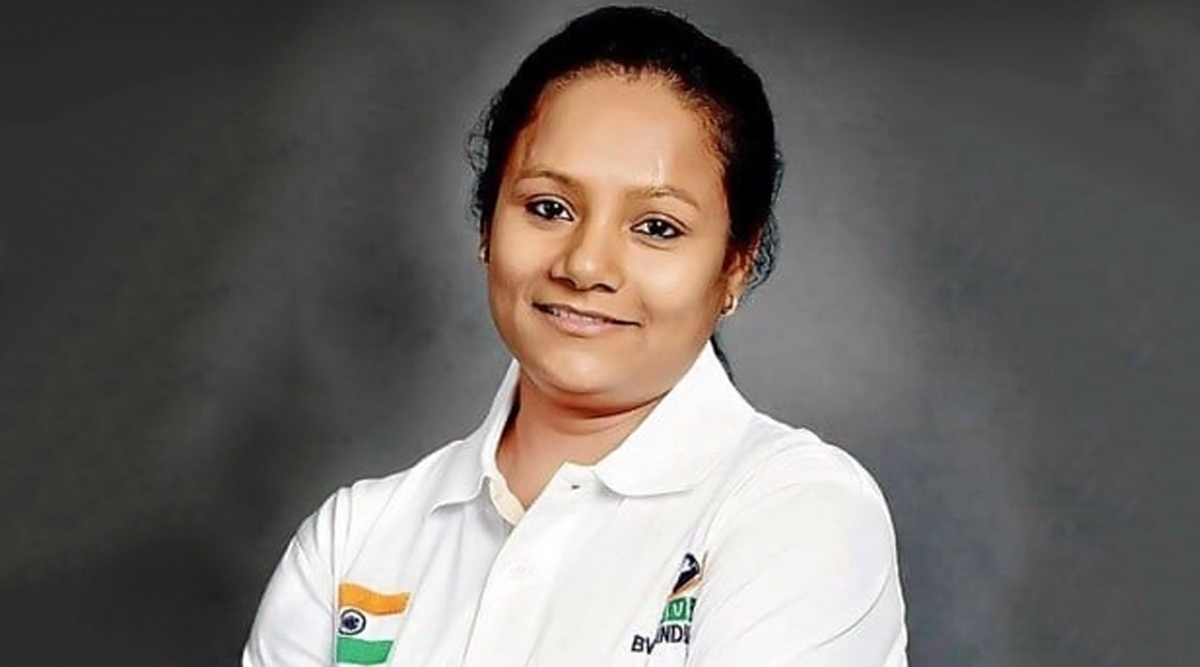
On the night of April 12, 2011, a 24-year-old national volleyball player lay bleeding on a railway track between Lucknow and Delhi.
She had been thrown from a moving train by robbers after refusing to hand over her gold chain. She had fallen onto the tracks. Seconds later, a train coming from the opposite direction ran over her left leg below the knee. She could not move. She could not get off the tracks. She lay there through the entire night, in agony, as rats began to gnaw at her severed leg — and 49 trains passed by without stopping. (Wikipedia)
Nobody came until morning.
While lying in her hospital bed at the All India Institute of Medical Sciences (AIIMS) in Delhi, one leg amputated, spine fractured, a rod inserted into what remained of her left limb, Arunima Sinha made a decision.
She was going to climb Mount Everest.
Two years later, on May 21, 2013, at 10:55 am, she stood at the summit — the world’s first female amputee to climb Mount Everest. She hoisted the Indian flag, took off her oxygen mask, and screamed. (Ability Magazine)
This is her story.
A Normal Life, Then Everything Changed
Arunima Sinha was born on July 20, 1989, in Ambedkar Nagar, a small district in Uttar Pradesh, 200 kilometres from Lucknow. Her father was an engineer in the army. Her mother, Gyan Bala, worked as a health supervisor in a government primary health centre. Her father passed away when Arunima was just three years old, and her brother-in-law Omprakash became the family’s de facto patriarch — a role he took seriously, encouraging Arunima at every turn. (Ability Magazine)
Arunima was a natural athlete. She competed at the national level in volleyball and was passionate about football and cycling. When she applied for a position with the Central Industrial Security Force (CISF), it felt like the next logical step in her life — a career in the paramilitary, a stable future, a goal she had worked towards. (Wikipedia)
On April 12, 2011, she boarded the Padmavati Express from Lucknow to Delhi to sort out an error in her CISF call letter. She never arrived.
The Night on the Tracks
Somewhere between Lucknow and Delhi, robbers entered her coach. They moved through the carriage, snatching bags and jewellery from other passengers. When they reached Arunima and demanded her gold chain, she fought back. (The Quint)
They threw her from the moving train.
She landed on the railway tracks between two parallel lines. A train coming from the opposite direction ran over her left leg. She tried to lift herself up. She couldn’t. She lay there on the tracks through the entire night — screaming for help, in shock, with rats beginning to gnaw at her severed limb — as 49 trains passed by without stopping. Locals found her the following morning and rushed her to the hospital. (Wikipedia)
She was taken to AIIMS in Delhi on April 18, 2011, where she spent four months recovering. Her left leg had been amputated below the knee. A rod was inserted into her right leg to support the fractures. Her spine had also been fractured in multiple places. (Ability Magazine)
A private Delhi-based company provided her with a prosthetic leg free of charge.
Then came a cruelty she hadn’t expected: the police announced they doubted her account of events. Their inquiry suggested she had either been attempting suicide or had met with an accident crossing the tracks. She denied it. She was already fighting for her life. Now she was fighting to be believed. (Wikipedia)
The Lucknow bench of the Allahabad High Court later sided with Arunima — ordering Indian Railways to pay her compensation of ₹5,00,000. (Wikipedia)
But while the legal battles played out, Arunima had already made her decision.
The Decision That Shocked Everyone
“I was an amputee now, and people were looking at me with pity in their eyes,” she said. “Whenever I saw my missing leg, I used to think, I will never let it be my weakness.” (Ability Magazine)
Lying in the AIIMS ward, inspired by cricketer Yuvraj Singh’s recovery from cancer and determined to silence both the police and the people who pitied her, Arunima set her goal: she would climb Mount Everest. When she told people, they laughed. Some called it delusion. She was an amputee with a fractured spine and a rod in her leg — and she wanted to climb the highest mountain in the world.
The more people doubted her, the harder she trained.
Two Years of Training With an Artificial Leg
After her discharge from AIIMS, Arunima enrolled in a basic mountaineering course at the Nehru Institute of Mountaineering in Uttarkashi. She trained with the TATA Steel Adventure Foundation. She took no days off — not Sundays, not Diwali, not holidays. (The Better India)
In September 2011 — just months after her accident — she climbed 21,110 feet up Mount Chhamser Kangri in Ladakh before being forced to turn back due to bad weather, just 690 feet from the summit. (The Better India)
In 2012, as preparation for Everest, she climbed Island Peak (6,150 metres). She also summited Mount Chaser Sangria (6,622 metres). The prosthetic leg bled. She kept going. (Wikipedia)
By early 2013, she was ready for Everest.
52 Days. One Summit. History Made.
Arunima began her Everest ascent as part of the Tata Group-sponsored Eco Everest Expedition. The climb took 52 days from Kathmandu to the summit. (Wikipedia)
The mountain did not make it easy. There were stretches with no ladders where she had to jump across crevasses — one wrong step meaning death. Her prosthetic leg made the pace slow, forcing other climbers to wait behind her. She stepped aside to let the impatient ones pass. She moved at her own pace. She kept climbing. (The Better India)
Near the summit, her oxygen supply ran critically low. Her Sherpa, Kancha, urged her to turn back and try again the next day. “Save your life now so that you can climb Everest again later,” he told her. (Ability Magazine)
Arunima told him she would go alone if he turned back. He didn’t turn back.
Two more hours of climbing. Then, at 10:55 am on May 21, 2013, Arunima Sinha stood at the top of the world. She took off her oxygen mask. She hoisted the Indian flag. She screamed. (The Quint)
“I wanted to tell everyone that I’m on top of the world — especially to those people who thought a woman and an amputee couldn’t do it.”
The descent almost killed her. With oxygen completely exhausted on the way down, she collapsed to the ground, gasping. She managed to tell Kancha: “If I don’t survive today, please make sure my video reaches India so that my conquest inspires every person who ever thinks of giving up.” A British climber had abandoned an oxygen cylinder nearby. Kancha found it. It saved her life. (The Quint)
Seven Summits. All Seven Continents.
Everest was not the end. It was the beginning. Arunima set a new goal: to climb the highest peak on every continent — the Seven Summits — becoming the first female amputee to complete them all.
She completed them one by one: Mount Kilimanjaro (Africa), Mount Elbrus (Europe), Mount Kosciuszko (Australia), Aconcagua (South America), and Denali (North America). Then, on January 4, 2019 — eight years after the night she lay bleeding on a railway track — she summited Vinson Massif in Antarctica, completing all seven. (Wikipedia)
She is the world’s first female amputee to complete all Seven Summits.
Recognition, a Book, and a Dream Academy
India recognised what she had achieved. In 2015, Arunima was awarded the Padma Shri — India’s fourth-highest civilian honour. She also received the Tenzing Norgay National Adventure Award — India’s highest mountaineering honour. (Wikipedia)
She has since been awarded an honorary doctorate — and is now widely referred to as Dr. Arunima Sinha. She wrote her autobiography, Born Again on the Mountain, which documents her journey from the railway tracks to the world’s highest peaks.
Her ongoing mission is to establish the Shaheed Chandra Shekhar Vikalang Khel Academy — a free sports academy for poor and disabled people. She donates her award money towards making it a reality. (The Better India)
What Her Story Actually Teaches
Arunima Sinha was not born into hardship. She had a normal childhood, a normal path, and a dream she was working towards. Then one night, through no fault of her own, everything was taken.
She lost her leg. Her spine was fractured. Her account of events was publicly doubted. She was pitied by strangers, disbelieved by the police, and laughed at when she announced her goal. The world handed her every reason to give up.
She took every single one of those reasons and turned them into fuel.
“I turned my artificial leg into my strength and stubbornly chose the most difficult sport for myself,” she says. (The Better India)
The thing they thought would stop her became the very thing that defined her. The prosthetic leg that slowed her on Everest is now the symbol of one of the most extraordinary athletic achievements in Indian history.
Whatever has been taken from you — whatever you’ve lost, whatever has been done to you, whatever people say you cannot do — remember the woman who lay on a railway track all night and decided, from a hospital bed, that she was going to climb the highest mountain on earth.
Your Everest is waiting. Start climbing.
Never give up.
Want more stories like this? Read about how Jyothi Reddy stepped back from a well in a rice paddy and built a $15M IT company, or how Michael Jackson turned a stolen childhood into the greatest entertainment career in history.
Sources
- Wikipedia — Arunima Sinha
- Ability Magazine — Arunima Sinha in Her Own Words
- The Quint — World’s First Woman Amputee to Scale Mt Everest
- The Better India — Being Thrown Off a Train Did Not Stop Her
- Amazon — Born Again on the Mountain (Autobiography)
- Nehru Institute of Mountaineering
- Wikipedia — Seven Summits