What does it cost to become the greatest entertainer the world has ever seen?
For Michael Jackson, the answer is this: no Christmas. No birthdays. No childhood. Rehearsals from the age of five, in a two-bedroom house in one of the poorest cities in America, with a father whose idea of encouragement was fear.
And yet — from that house, from that pain, from that stolen childhood — came the man who broke every record music had ever set. The man who made 47 million people stop breathing for two and a half seconds when he slid backwards across a stage in 1983.
This is not just a success story. It is a survival story. And it deserves to be told properly.
Gary, Indiana: Where It All Began
Michael Joseph Jackson was born on August 29, 1958, in Gary, Indiana, a working-class steel town 25 miles south of Chicago. He was the eighth of ten children. His family lived in a two-bedroom house on Jackson Street. (Wikipedia)
His father, Joe Jackson, worked gruelling shifts as a crane operator at U.S. Steel and played guitar in a local R&B band on weekends to make extra money. His mother, Katherine, was a devout Jehovah’s Witness who had once dreamed of being a performer herself — she played clarinet and piano — but had set those dreams aside to raise nine children and work part-time at Sears. (History Collection)
Because of Katherine’s faith, the family did not celebrate Christmas or birthdays. Michael later described it plainly at the 1993 Grammy Legend Award ceremony: “There was no Christmas, there were no birthdays. It was not a normal childhood, nor the normal pleasures of childhood. Those were exchanged for hard work, struggle and pain.” (Indiana Hub)
The house was small. The neighbourhood was rough. And Joe Jackson had a plan.
A Father Who Drove Them With Fear
Joe Jackson recognised early that his sons had musical talent. What followed were long, gruelling rehearsals — every day, relentless. Michael first performed publicly at age five. By age eight, he was the lead singer of The Jackson 5. (Indiana Hub)
But Michael grew up performing in nightclubs before he was old enough to be inside one. “I grew up onstage. I grew up in nightclubs. When I was seven, eight years old, I was in nightclubs,” he revealed in a 2002 interview. “I saw striptease girls take off all their clothes. I saw fights break out. I saw adults act like pigs.” (Biography.com)
Michael later said openly that his father physically and emotionally abused him throughout his childhood — enduring incessant rehearsals, whippings, and relentless name-calling, including Joe repeatedly mocking him about his nose. Joe Jackson denied the characterisation of abuse, but Michael first spoke about it publicly in his landmark 1993 Oprah Winfrey interview, telling her he often cried from loneliness as a child. (Wikipedia)
Here is the brutal truth of it: the very discipline that drove Michael to greatness was also the thing that robbed him of a normal life. He would spend the rest of his years trying to reclaim something he never had.
But first — the world had to notice him.
The Jackson 5: America’s First Obsession
The Jackson 5 were signed to Motown Records in 1969. Michael was eleven years old. Their first four singles — “I Want You Back,” “ABC,” “The Love You Save,” and “I’ll Be There” — all went to number one. Michael remains the youngest vocalist ever to top the Billboard Hot 100, having done it at just 11 years, 5 months old. (Wikipedia)
America fell in love with these boys from Gary. The Jackson 5 became the heroes of a generation. And at the centre of it all was a child who could sing and move in ways that made grown adults weep — a child who had never been to Disneyland, never had a birthday party, and had already been working for years.
Going Solo — and Not Being Satisfied
At 21, Michael made one of the most important decisions of his career: he cut ties with his father as his manager, took control of his own creative direction, and went solo. (Wikipedia)
His first solo album, Off the Wall (1979), produced with Quincy Jones, sold over 20 million copies worldwide and became the most successful album by a Black artist in history at the time. (Wikipedia)
Most artists would have celebrated. Michael was not satisfied.
The album did not win the Grammy Award for Album of the Year. For many people, that would sting and fade. For Michael Jackson, it became fuel. “I felt that my colleagues ignored me, and it was painful,” he wrote in his autobiography Moonwalk. “I was only thinking about the next album, and how I would make it really great.” (Saturday Evening Post)
That refusal to accept “very good” is one of the most underrated parts of his story.
Thriller: The Album That Changed Everything
Released on November 30, 1982, Thriller is not just the best-selling album Michael Jackson ever made. It is the best-selling album in the history of recorded music, with an estimated 70 million copies sold worldwide and certified 34x Platinum in the United States alone. (Guinness World Records)
It spent 37 weeks at number one on the Billboard 200 — a record for the longest run at number one by a studio album. It produced seven US Top 10 singles from a single album, another record. (Wikipedia)
At the 1984 Grammy Awards, Thriller won eight Grammy Awards — including Album of the Year — the most won by any artist in a single night. (RIAA) That same night, he also took home eight American Music Awards.
In 2008, Thriller was inducted into the Grammy Hall of Fame and added to the Library of Congress National Recording Registry as a recording “culturally, historically, or aesthetically significant.” (Wikipedia)
The boy from the two-bedroom house in Gary had just made the most important album ever recorded.
The Night He Stopped the World
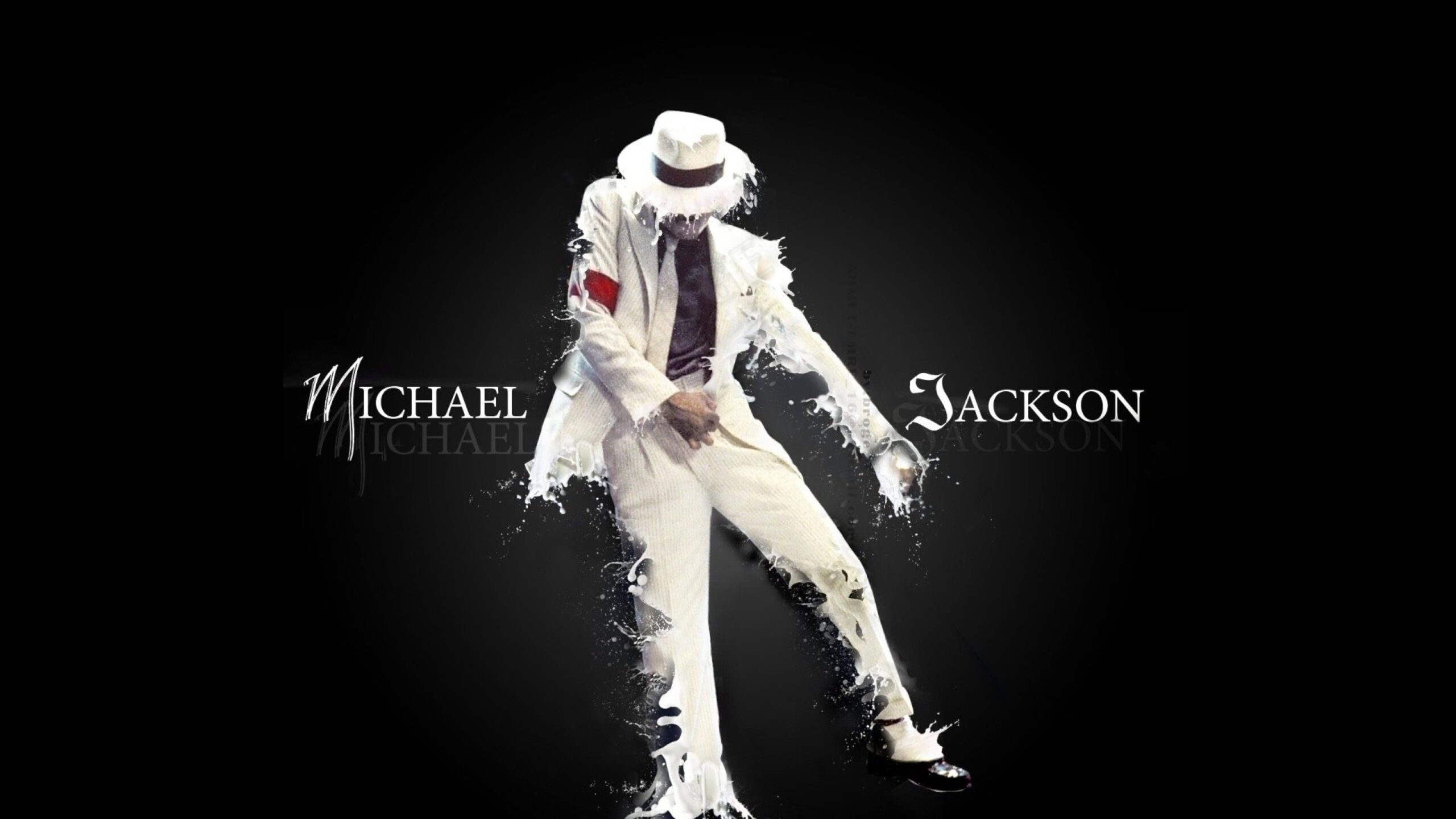
On May 16, 1983, 47 million Americans tuned in to watch Motown 25: Yesterday, Today and Forever on NBC. Jackson performed “Billie Jean” — the only non-Motown song on the show, which he had personally fought to include. (Wikipedia)
Midway through the performance, dressed in his now-iconic black sequined jacket, silver socks, and rhinestoned glove, he planted his feet — and slid backwards.
The moonwalk. Two and a half seconds. The audience erupted.
“After that was over, we just knew this was incredibly special,” said show director Don Mischer. (Yahoo Entertainment) It was the moment a superstar became a legend. The moment a dance move became a cultural symbol. The “Billie Jean” video also made history as the first video by a Black artist to be played in heavy rotation on MTV — breaking a racial barrier that had held firm since the channel launched. (Wikipedia)
The Price of Greatness
What the records don’t tell you is what it cost him.
Michael Jackson spent his adult life trying to rebuild the childhood that was taken from him. Neverland Ranch — the estate he built and filled with fairground rides, animals, and the trappings of childhood — was his attempt to live the life he never had. He later said in his own words that he would never be able to recreate that part of his life, no matter how much money he had.
He battled vitiligo, a skin condition that caused his pigmentation to change — something he was ruthlessly mocked for, despite it being a documented medical condition. He suffered severe scalp burns during a Pepsi commercial shoot in 1984. He developed a dependence on painkillers as a result of injuries sustained over decades of performing. (History Collection)
And through it all, he kept performing. Kept creating. Kept showing up.
During his extraordinary career, Michael Jackson sold over a billion records worldwide, scored 13 number one singles on the Billboard Hot 100, and was inducted twice into the Rock and Roll Hall of Fame — once as a member of the Jackson 5 and once as a solo artist. (RIAA) The Guinness Book of World Records named him the most successful entertainer in history.
He passed away on June 25, 2009. He was 50 years old.
What His Story Actually Teaches
Michael Jackson’s story is not a straightforward triumph. It is complicated, painful, and human. But within it lives one of the most powerful never-give-up lessons there is.
He did not have a fair start. Not even close. He had an abusive father, a stolen childhood, no room to fail, and the weight of his family’s survival on his shoulders from the age of five. He had every reason to be broken by it.
Instead, he used it. The loneliness went into “Billie Jean.” The hunger for validation went into Thriller. The lost childhood went into every performance — the yearning, the vulnerability, the joy that felt desperate because it was.
Greatness rarely comes from comfort. It comes from people who had no other choice but to be extraordinary — and chose to keep going anyway.
Whatever you are carrying right now — whatever was taken from you, whatever you never got — the question is the same one Michael faced every night before he walked on stage:
What will you do with it?
He didn’t give up. And neither should you.
If this hit something in you, share it with someone who needs it today. And if you want more stories like this, read about how Sylvester Stallone said no to $350,000 while sleeping at a bus station, or how Shah Rukh Khan arrived in Mumbai with nothing and became King Khan.
Sources
- Wikipedia — Michael Jackson
- Wikipedia — Thriller (album)
- Wikipedia — Joe Jackson
- Wikipedia — Michael Jackson Records & Achievements
- Wikipedia — Motown 25
- Wikipedia — Billie Jean
- Guinness World Records — Best-Selling Album of All Time
- RIAA — Thriller 30x Platinum Certification
- Britannica — Thriller
- Biography.com — Michael Jackson Growing Up in Gary, Indiana
- Indiana Hub — Michael Jackson Childhood in Gary
- History Collection — 30 Real Facts About Michael Jackson’s Childhood
- Saturday Evening Post — Thriller by the Numbers
- Yahoo Entertainment — Why Michael Jackson’s Motown 25 Moonwalk Almost Didn’t Happen