Picture this.
Delhi, 1991. A 25-year-old sits in a rented apartment surrounded by the remnants of a life that has just fallen apart. His father — gone ten years ago, taken by cancer before he could see anything his son would become. His mother — gone now too, just weeks ago, after years of illness and grief and slow decline. His sister is barely holding herself together.
He has no money. No safety net. No film career. No plan.
He has a grief so heavy it is difficult to breathe.
He could have stayed. Gone back to the television work that was keeping him afloat. Found a stable job with his Economics degree. He took the sensible road that everyone around him would have understood.
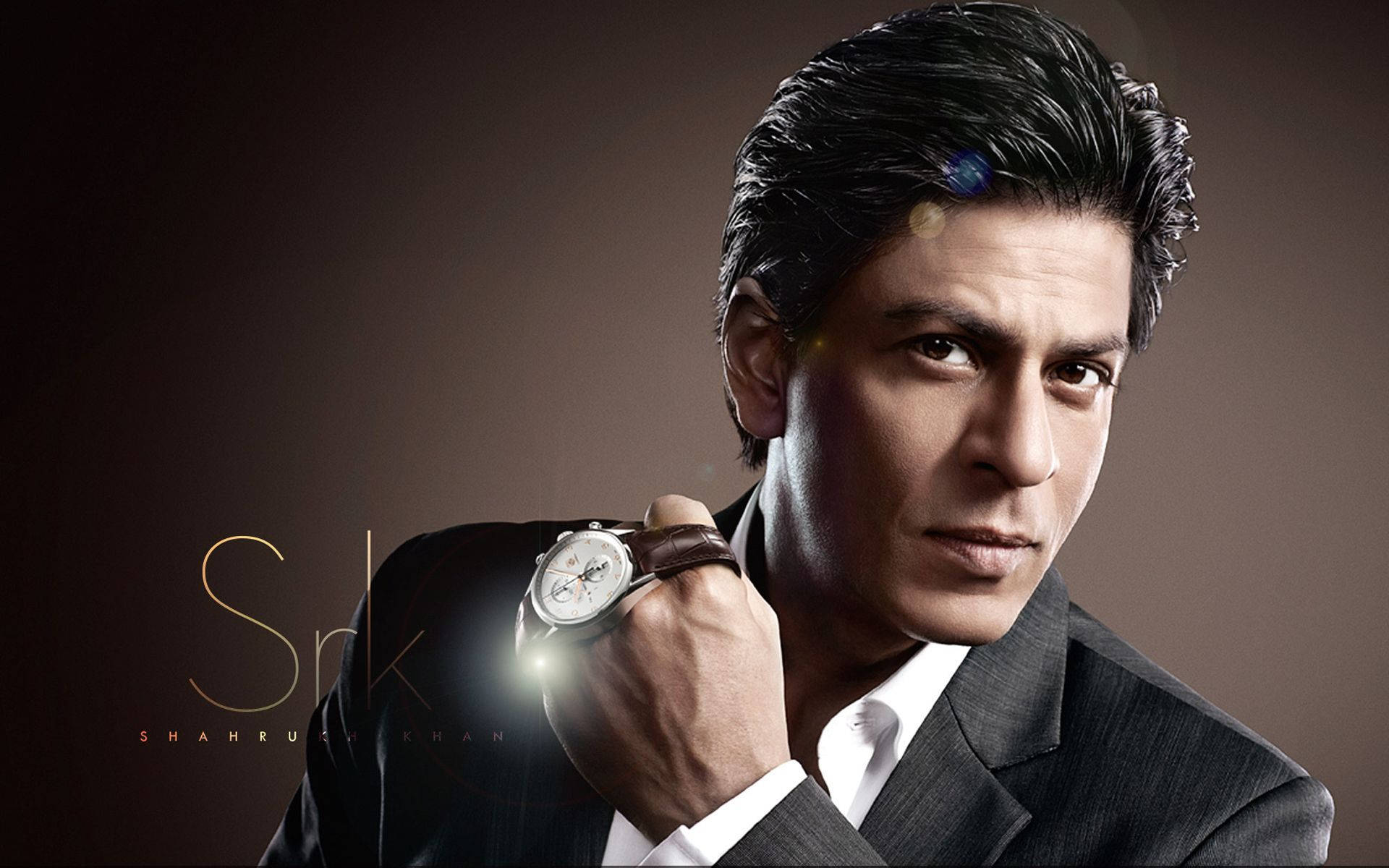
Instead, Shah Rukh Khan packed a bag and got on a train to Mumbai.
Not because he was fearless. Not because he had a strategy. But because staying still meant drowning in the loss. And he had made a quiet, private promise — to his father’s photograph on the wall — that he was going to build something so big that wherever his parents were, they would be able to see it.
That promise is what this story is about.
Before the Dream, There Was Loss
Shah Rukh Khan was born on 2 November 1965 in New Delhi, the son of Mir Taj Mohammed Khan — an Indian independence activist from Peshawar who had campaigned alongside the Khudai Khidmatgar nonviolent resistance movement before Partition, studied law at Delhi University, and settled in Delhi to raise a family. (Delhi Portal)
His father was a remarkable man. Fluent in six languages. Politically active. Affiliated with the Indian National Congress. A 6’2″ Pathan with grey eyes and the quiet authority of someone who had lived through history. (Masala.com)
Shah Rukh idolised him.
In 1981, when Shah Rukh was 15, his father died of cancer. The family didn’t have enough money for better treatment. (Tellychakkar)
Shah Rukh has talked about that loss in interviews across four decades — and each time, you can hear it. The rawness of it. The fact that it never fully healed. He visits his father’s grave every year on his birthday. He talks to his father’s photograph before making major decisions. As if the conversation never ended. As if he is still trying to be worthy of him.
His mother, Lateef Fatima, held the family together after her husband’s death — but she was fighting her own battles. Illness. Depression. A body and a spirit that were both exhausted. She died in 1991, when Shah Rukh was 26, from complications of diabetes. (Wikipedia)
By his mid-twenties, Shah Rukh Khan had buried both parents.
His sister Shahnaz fell apart. He quietly took over the responsibility of caring for her — a responsibility he has carried ever since. She lives with him and his family to this day in their Mumbai home. [Source: Wikipedia]
This is the foundation of everything. Not talent. Not ambition. A boy shaped by loss, carrying grief like a second skin, looking for something to run towards.
The Outsider Who Wouldn’t Leave
When Shah Rukh arrived in Mumbai in 1991, he had none of the things that were supposed to matter.
No film industry family. No connections. No godfather. No money. No reputation that carried any weight in a city that runs on all four.
He had done television — Fauji, Circus, Wagle Ki Duniya — and critics had compared his look and acting style to Dilip Kumar. But in Mumbai’s film world, television meant nothing. You were a small screen face in a big screen city, and the distance between the two felt enormous. [Source: Wikipedia]
What he had was a refusal to be invisible.
He auditioned everywhere. Knocked on every door that would open. Pushed through the ones that wouldn’t. A film magazine rejected his interview request at this time because they weren’t convinced he was a “star” yet. Think about that — rejected not for a film role, but for an interview. Not famous enough to even talk about. (Pinkvilla)
The industry looked at him and saw all the wrong things. Wrong background. No connections. A television actor from Delhi who thought he could walk into Bollywood.
But here is the thing about Shah Rukh that most people miss — he didn’t arrive in Mumbai with desperate hope. He arrived with a specific kind of stubbornness. The stubbornness of someone who has already lost the worst things possible and knows that rejection from a film producer is nothing compared to watching your father die in a hospital bed because you couldn’t afford the treatment.
When you have survived real loss, the entertainment industry’s rejections have a different weight.
He stayed. He kept showing up. And eventually, Hema Malini spotted him in Fauji and gave him his first film offer. By June 1991 — within months of arriving — he had signed four films. (IBTimes)
₹4 Lakh and a Brutal Honest Review
His debut film, Deewana, was released on 25 June 1992.
He was not the lead. He appeared only in the second half. He wasn’t even the first choice — he was a replacement for Armaan Kohli, who had been a bigger name at the time. He was paid ₹4 lakh for the entire film. He was, to everyone who saw him on that set, a supporting actor filling a gap. ([India TV News](https://indiatvnews.com/entertainment/bollywood/shahrukh-khan-debut-film-deewana-unknown-facts-22267.html | Siasat))
Deewana became the second-highest-grossing film of 1992. Not because of Shah Rukh — because of the music, the story, Rishi Kapoor.
Shah Rukh knew this. He said it himself.
“My performance was awful — loud, vulgar and uncontrolled. I overacted terribly, and I take full responsibility for it.” (Koimoi / Filmfare)
He has never watched the film. Not once in over 30 years.
That kind of brutal self-honesty is rare. Most people in his position — first film a hit, sudden attention, a foot in the door — would have ridden the wave and convinced themselves they deserved it. Shah Rukh looked at the reality clearly, admitted what he saw, and decided to get better.
The Risk That Changed Everything
In 1993, Shah Rukh Khan made a decision that could have ended his career before it started.
He accepted the role of a murderer in Baazigar. A character who kills the heroine — the female lead — halfway through the film. In Bollywood in 1993, this was not done. Heroes did not kill heroines. The romantic leading man was supposed to be safe, lovable, and aspirational.
Shah Rukh said yes anyway.
Then, in Darr, he played an obsessive stalker — mentally unhinged, genuinely frightening, a character the audience was supposed to fear.
Both films were blockbusters. Both roles made him a star.
But here is what that decision actually took — it took someone willing to risk everything on instinct. Willing to look at the safe, conventional path that was being offered and walk in the opposite direction. Willing to be wrong. Willing to be the villain when everyone else was trying to be the hero.
That willingness — to back yourself when nobody else will, to take the risk that makes no sense on paper — is the thread that runs through every chapter of his story.
The Empire He Built and the Years It Wobbled
What followed between 1995 and 2010 is one of the most extraordinary runs in the history of world cinema.
Dilwale Dulhania Le Jayenge (1995) ran continuously at Mumbai’s Maratha Mandir cinema for over 25 years — the longest theatrical run in Indian cinema history. [Source: Wikipedia] Kuch Kuch Hota Hai (1998). Mohabbatein (2000). Devdas (2002). Swades (2004). Chak De! India (2007). My Name Is Khan (2010).
He won 14 Filmfare Awards. Received the Padma Shri in 2005. Was named the second richest actor in the world in 2014, worth $600 million. Thirteen of his films grossed over a billion rupees worldwide. (JioSaavn / Wikipedia)
And then, between 2016 and 2018, there were three consecutive commercial failures.
Fan. Jab Harry Met Sejal. Zero.
His brand value dropped from $106 million in 2017 to $55.7 million in 2022. He lost his position as India’s top celebrity influencer. The narrative shifted — critics and audiences who had never liked him started saying openly that his time was done. That he was out of touch. That Bollywood had moved on. (Deccan Chronicle)
For five years — 2018 to 2023 — he had no major releases.
Five years of silence while the world watched and waited and wrote him off.
The Comeback
Here is what he did during those five years.
He went quiet. Completely, deliberately, uncomfortably quiet.
No desperate press statements. No interviews explaining himself. No announcements of future projects designed to reassure the industry that he was still relevant.
He sat with the failure. He thought about it honestly. And in that silence, he arrived at a conclusion that took real courage to admit — he had stopped hearing the people he was making films for.
“I had stopped hearing the crowds,” he said later. “I had become too innovative, and I was looking for perfection. I started failing. I needed to be unique, but I needed to look at what the audience wanted.” (Khaleej Times)
That is not a small thing to admit. That is a man who had spent 25 years being told he was a genius, sitting alone with the uncomfortable truth that he had lost his way — and choosing to be honest about it rather than defensive.
He also said something else during this period that reveals more about his character than any of his successes ever could. He had stopped enjoying the process of acting. Not the fame. Not the money. The actual work. The thing he had given everything to since the day he arrived in Mumbai with grief in his chest and no plan except to keep moving.
When the work stops feeling like it means something, the options are simple. You keep going through the motions and let the world watch you hollow out. Or you stop. You rebuild. You remember why you started.
Shah Rukh stopped. He rebuilt. He remembered.
He reconnected with his family during those years in a way that the relentless pace of his career had never allowed. He thought about what he wanted to say with the time he had left as a performer. He asked himself — not what the industry needed from him, but what the audience, the people who had sat in darkened cinemas across the world and felt something because of his films, actually needed.
The answer, when it came, was simple. They needed hope. They needed to see him show up and remind them that things can turn around. That the comeback is possible. That the man who has been counted out can still walk back through the door.
On 25 January 2023, Pathaan was released.
There had been months of controversy before it hit screens. Boycott calls. Protests. People declared it would fail before a single ticket was sold.
Pathaan made ₹1,055 crore worldwide.
In September 2023, Jawan released and became Bollywood’s highest net-grossing film of all time — ₹640 crore at the domestic box office alone.
Two films. One year. Both crossed ₹1,000 crore. After five years of silence. After the flops. After every person who had decided his time was done.
8.39 crore tickets sold in 2023. By a man who had been written off. By a man who had gone quiet, sat with the failure, been honest about what had gone wrong, and come back with complete, devastating clarity about what he was there to do.
The people who had declared him finished went very quiet.
What He Was Really Doing All Along
Shah Rukh Khan once described his ambition like this:
“I make movies so damn bloody big that my parents somewhere sit down on a star and from there look at their son and say — I can see his movies covering the face of this earth.”
Every film is a conversation with two people who are no longer here.
Every comeback — from the television actor nobody took seriously, to the villain they couldn’t ignore, to the romantic hero who redefined an entire genre, to the man who came back from five years of silence and broke every record — every single chapter of this story is the same story underneath.
A boy who lost his father at 15 and his mother at 26 and made a promise he has never stopped keeping.
Not once — not through the flops, not through the silence, not through the five years of people telling him it was over — did he let go of that promise.
That is what never giving up actually looks like.
Not the motivational poster version. Not the highlight reel. The real version — quiet, private, painful, stubborn, human.
A man who sat with failure long enough to understand it. And then came back and broke every record that existed.
You don’t have to be strong. You just have to keep going.
Sources:
- Wikipedia — Shah Rukh Khan
- Delhi Portal — Mir Taj Mohammed Khan
- Masala.com — SRK’s Father
- Tellychakkar — Father’s Death
- Pinkvilla — Magazine Rejection
- IBTimes — First Film Offer
- India TV News — Deewana Facts
- Siasat — Deewana Salary
- Koimoi — Deewana Performance Quote
- Bollywood Shaadis — Pizza Quote
- Deccan Chronicle — Flop Era
- JioSaavn — Career Stats
- Koimoi — 2023 Comeback